Handmade Designs: The New Trust Signal in the Age of AI
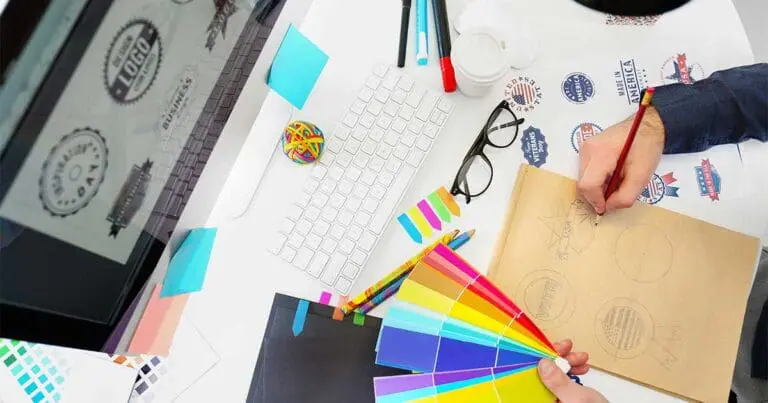
Handmade design is emerging as a trust signal because AI has made polished visuals easy to produce.
As high-quality outputs become ubiquitous, users increasingly interpret imperfection, subtle irregularities, visible process, and human variation, as evidence of intent, effort, and authorship.
In this context, credibility is shifting from how clean something looks to how it feels.
Why Polished Design No Longer Signals Quality
Polished design no longer signals quality because, with the use of AI, clean has become the new baseline, sameness reduces perceived originality, and visual quality is no longer a signal for trust.
Clean is now the baseline, not the signal
Polished design once implied expertise and investment. Now it implies tool proficiency. The barrier to producing high-end visuals has collapsed, flattening perceived quality across creators.
Sameness reduces perceived originality
AI-generated outputs often converge on similar structures, styles, and compositions. This visual homogeneity weakens differentiation and reduces perceived effort.
Visual quality is no longer a signal for trust
Users are adapting. Instead of asking “Does this look good?” they’re asking “Does this feel real?” Trust is shifting away from aesthetics toward signals of origin.
What “Handmade” Design Actually Signals
Handmade design signals imperfection as evidence of process, human variation over machine consistency, and that small “errors” are proof of the work put into the design.
Imperfection as evidence of process
Irregular lines, inconsistent spacing, and non-uniform elements suggest that the work wasn’t generated instantly. These artifacts imply time, iteration, and manual input.
Human variation over machine consistency
Handwritten typography, uneven grids, and subtle asymmetries introduce variability that AI systems typically smooth out. That variation becomes a credibility cue.
Small “errors” as proof of work
Micro-frictions, slight misalignments or texture noise, signal that the output wasn’t optimized to perfection. Users increasingly read this as authenticity rather than sloppiness.
Why Imperfection Builds Trust
Imperfection in design builds trust because with AI design tools and editors, consistency has become suspicious so variation signals authenticity and trust is shifting from poling to
Consistency is now suspicious
Highly uniform outputs can feel synthetic. When every element aligns perfectly across contexts, users may infer automation rather than craftsmanship.
Variation signals authenticity
Humans introduce inconsistency, even unintentionally. These deviations are interpreted as signals of real involvement, especially in creative work.
Trust is shifting from polish to proof of origin
The core shift is not aesthetic it’s knowledge and experience. Users want to know where something came from, not just how it looks. Design origin is becoming the new trust layer.
How to Design for Trust
To design for trust, designers should intentionally introduce human cues, add texture, roughness, and analog elements, show the process, and highlight the creator behind the work.
Intentionally introduce human cues
Subtle asymmetry, non-repeating elements, or slight irregularities can signal authorship without degrading usability.
Add texture, roughness, and analog elements
Grain, brush strokes, and physical textures create a sense of materiality, suggesting the work passed through human hands.
Show the process
Exposing sketches, drafts, or iterations makes effort visible. It shifts perception from output to journey.
Highlight the creator behind the work
Names, faces, or personal signatures anchor the design in a real way. Effort becomes attributable and therefore more trustworthy.
The Risk: Manufactured Imperfection
The risk of manufactured imperfection includes designs that feel too engineered, “fake handmade” designs can create an authenticity gap, overuse can degrade clarity, and misalignment weakens credibility.
It backfires if it feels engineered
If irregularities look patterned or repeatable, users may interpret them as stylistic overlays rather than genuine artifacts.
“Fake handmade” creates an authenticity gap
When brands simulate imperfection without underlying process, the signal collapses. Users detect the mismatch between appearance and origin.
Overuse degrades clarity
Too much roughness or inconsistency can appear careless. The goal is signal, not noise.
Misalignment weakens credibility
In high-trust environments (finance, healthcare, enterprise UX), excessive imperfection can undermine confidence rather than build it.
How to Apply It Without Losing Credibility
To apply it without losing credibility, use it selectively, save it for storytelling and brand expression, avoid it in high-precision environments, and pair structure with variation.
Use it selectively, not system-wide
Apply human elements in brand moments, not core functionality. This preserves usability while adding authenticity.
Best for storytelling and brand expression
Landing pages, campaigns, and editorial content benefit most from visible human touch.
Avoid in high-precision environments
Interfaces requiring clarity, accuracy, and speed should remain clean and consistent.
Pair structure with variation
A stable grid with occasional asymmetry creates controlled tension. Controlled imperfection outperforms total redesign.
Building Trust as a Designer in the Age of AI
In an AI-saturated landscape, perfection is easy. What’s scarc, and increasingly valuable, is evidence of a human behind the work.
Designers who make effort visible, variation intentional, and authorship clear will earn trust not by looking better, but by feeling real.
Looking to hire top-tier Tech, Digital Marketing, or Creative Talent? We can help.
Every year, Mondo helps to fill thousands of open positions nationwide.
More Reading…
- How Elite Product Teams Are Built: 15 Hiring Strategies That Actually Work
- Cisco’s AI Strategy Signals a Shift Toward Infrastructure-Led AI Execution
- Medium’s AI Manifesto Redefines Engineering And Quietly Reshapes Teams
- Why Webflow Developer Hiring Requires a New Talent Model
- Why SaaS Security Failures Are Really Talent Failures
- Anodot Breach Exposes SaaS Supply Chain Risk
- Algorithms Don’t Know Your Potential: Understanding ATS Resume Optimization
- 5 Signs Your Hiring Process is Penalizing Overqualified Candidates
- The Prompt Engineering Boom: How “Hot Skills” Become Basic Skills
- Why Hiring Feels Hard: The Job Market Mismatch Behind the Data
- Scenario-Based Workforce Planning as a Response to Murky Labor Signals
- What Gaming Industry Hiring Trends Reveal About the Next Talent Market Cycle