The Supreme Court Just Drew a Line on AI Art. Creative Teams Should Pay Attention
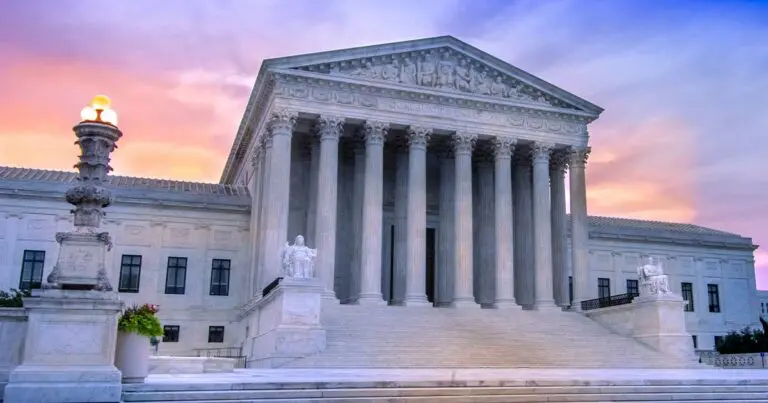
The US Supreme Court recently declined to hear a case challenging whether AI-generated works can receive copyright protection.
Lower courts and the United States Copyright Office previously ruled that work created entirely by artificial intelligence cannot be copyrighted because it lacks human authorship. Without a human creator, AI-generated outputs do not meet the requirements for copyright registration under existing copyright law.
At first glance, this may seem like a narrow legal decision.
But for organizations increasingly using generative AI tools across marketing, design, and content production, the implications are much broader.
If AI-generated content cannot qualify for copyright protection, companies must rethink how creative work is produced, reviewed, and owned. As generative AI systems become embedded in everyday workflows, businesses will need to ensure that human creation and creative effort remain part of the process.
Can AI-Generated Content Be Copyrighted?
Copyright Law Requires Human Authorship
US copyright law has long required that a copyrighted work originate from a human creator.
Courts reviewing the recent case reaffirmed that principle. The ruling confirms that AI-generated works produced entirely by algorithms or AI models cannot qualify for copyright protection because they lack human authorship.
The Copyright Office has consistently maintained this position as well. Without meaningful human contribution, AI-generated outputs cannot be registered as copyrighted work.
In practical terms, this means that fully AI-generated content may fall into the public domain, where it cannot be owned or protected by a specific creator or organization.
AI Tools Can Assist Creation but Cannot Be the Author
The ruling does not prohibit people from using generative AI models as part of the creative process.
In fact, the United States Copyright Office has clarified that humans can still receive copyright protection when AI tools assist with creation. The key question is whether human authorship meaningfully shaped the final work.
For example, AI prompts, prompt instructions, and prompt engineering may guide a generative AI system, but copyright eligibility still depends on whether a person contributed creative judgment, editing, or direction.
The distinction between AI-generated outputs and AI-assisted human creation is becoming increasingly important as generative AI adoption expands.
Why This Matters for Modern Creative Teams
Generative AI Is Already Embedded in Creative Workflows
Across the creative industries, generative AI tools are rapidly becoming part of everyday work.
Marketing teams use generative AI systems to draft campaign content and generate visuals. Designers experiment with AI models to explore concepts and speed up iteration. Writers use Large Language Model tools to produce early drafts of articles, scripts, and other literary works.
These tools significantly accelerate production.
A project that once required hours of creative development can now begin with AI-generated outputs created in seconds.
But speed introduces a new question.
If content is produced largely through generative AI models, who actually owns the result?
Copyright Protection Determines Ownership and Control
Copyright protection allows organizations to control how creative work is used, distributed, and monetized.
Without clear copyright ownership, businesses may struggle to protect the originality of marketing campaigns, visual assets, or branded materials.
If a piece of content is determined to be purely AI-generated, it may not qualify as copyrighted work at all. That can complicate how companies protect their intellectual property and enforce rights against copyright infringement.
For organizations producing large volumes of AI-assisted content, this legal distinction matters more than ever.
The Operational Risk for Companies Using Generative AI
Intellectual Property Protection Becomes Less Certain
When companies rely heavily on AI-generated content, they may unknowingly produce assets that lack legal protection.
Without copyright registration, it becomes more difficult for copyright holders to prevent unauthorized reuse of creative work. This can weaken brand protection and create uncertainty around ownership.
In addition, the legal landscape around generative AI continues to evolve. Courts and policymakers are still determining how legal frameworks should address AI-generated outputs, derivative works, and the liability of content platforms that distribute AI-created material.
These questions are still being debated across the industry.
Creative Differentiation May Become Harder
Another challenge is creative similarity.
Most generative AI systems rely on training AI models using large datasets drawn from existing content. Because many organizations rely on similar AI models and tools, outputs may begin to converge visually or stylistically.
Without strong human creative direction, AI-generated assets may start to look increasingly alike.
In a competitive marketplace, that lack of differentiation can weaken branding and reduce the originality that companies rely on to stand out.
Why Human Creativity Is Becoming More Valuable
Creative Direction Defines Original Work
While generative AI tools can generate a wide range of visual and written outputs, they do not independently determine creative intent.
Human creators provide the judgment that defines originality. Designers establish visual direction. Writers shape narrative voice. Marketing leaders connect creative work to strategy.
That creative effort transforms raw AI-generated outputs into original work that reflects human insight and brand identity.
Human Authorship Protects Intellectual Property
The Supreme Court’s decision reinforces the importance of human authorship in securing legal protection for creative work.
Organizations that rely entirely on AI-generated works risk producing assets that lack copyright protection. By contrast, teams that integrate generative AI tools into human-led workflows maintain the authorship required for copyright registration.
Human involvement does not slow creativity.
It protects it.
How Creative Workflows Are Evolving in the AI Era
Hybrid Creation Models Are Emerging
Across marketing, design, and media teams, creative workflows are shifting toward hybrid production models.
In these models, generative AI tools accelerate ideation, draft development, and early production. Human creators then refine the work, shape the narrative, and guide the final output.
This collaboration between AI systems and human creators allows organizations to move faster while still preserving authorship and originality.
Creative Roles Are Shifting Toward Direction and Oversight
As generative AI systems become more powerful, the role of creative professionals is evolving.
Designers and writers increasingly act as creative directors who guide AI outputs rather than producing every element manually. Professionals skilled in prompt engineering and AI-assisted workflows can translate raw AI-generated outputs into polished creative work.
Rather than replacing creative professionals, AI tools are reshaping how creative expertise is applied.
What Hiring Managers Should Be Thinking About
AI Fluency Is Becoming a Core Creative Skill
For companies building marketing and creative teams, AI fluency is quickly becoming a core capability.
Creative professionals now need to understand how generative AI models, AI prompts, and Large Language Model tools influence content generation.
The ability to work effectively alongside AI systems is becoming an increasingly valuable skill across the creative workforce.
Creative Judgment Remains the Differentiator
Even as artificial intelligence accelerates production, it cannot replace human evaluation.
Organizations still need professionals who can interpret AI-generated outputs, refine creative direction, and ensure that final work reflects both originality and brand identity.
Human judgment remains the most important signal of creative quality.
The Real Takeaway for Creative Teams
The Supreme Court’s decision reinforces a fundamental truth about generative AI.
Artificial intelligence can accelerate creative production.
But authorship, originality, and ownership still depend on humans.
For organizations experimenting with generative AI tools across marketing, design, and content production, the takeaway is clear.
AI can assist creation.
Human creativity still owns it.
Looking to hire top-tier Tech, Digital Marketing, or Creative Talent? We can help.
Every year, Mondo helps to fill thousands of open positions nationwide.
More Reading…
- As AI Job Applications Get Easier, Hiring Gets Harder
- If Candidates Are Using ChatGPT to Find Jobs, Employers Must Rethink Visibility
- How to Stand Out in a Competitive Job Market? Ownership Over Activity.
- Are Resumes Dying? What Hiring Managers Should Pay Attention to Now
- AI Job Matching Volume Is Rising. But Hiring Clarity Isn’t.
- Skills-Based Hiring Is Growing, But So Is Hiring Friction
- How to Build a High-Performing Team That Actually Delivers Results
- What Bing’s New AI Performance Report Means for Content Teams
- The AI Security Talent Gap Is Growing
- In the Age of AI, Will AQ Matter More Than IQ and EQ?
- Why Europe’s Split From Visa & Mastercard Will Create FinTech Talent Demand
- Why Workforce Planning Matters More Than Technology in 2026