9 Soft Skills Employers Value in Today’s Workplace

Technical expertise may help someone qualify for a role, but it is often their soft skills that determine how effectively they communicate, collaborate, solve problems, and adapt once they are in it.
Also known as interpersonal or non-technical skills, soft skills have become especially important as employers place greater emphasis on demonstrated capabilities rather than credentials alone. According to the National Association of Colleges and Employers’ Job Outlook 2026, nearly 70% of participating employers report using skills-based hiring, most commonly during interviews and candidate screening.
For job seekers, that makes it increasingly important to not only identify relevant soft skills, but demonstrate how they have used them in real workplace situations.
What are soft skills in the workplace?
Soft skills are interpersonal, behavioral, and problem-solving abilities that influence how someone works, communicates, makes decisions, and interacts with others.
Unlike hard skills, which generally describe technical abilities such as coding, data analysis, graphic design, or using a particular platform, soft skills tend to transfer across roles and industries.
Examples include communication, adaptability, critical thinking, collaboration, leadership, and conflict resolution.
Why are soft skills important in the workplace?
Soft skills help employees apply their technical expertise effectively.
Someone may have the technical qualifications required for a job, but still need to communicate ideas clearly, collaborate with colleagues, respond to feedback, navigate ambiguity, and solve unexpected problems to succeed in the role.
They are also becoming more visible in the hiring process. NACE’s Job Outlook 2026 found that nearly 70% of participating employers use skills-based hiring, with 87% of those employers using it during interviews and 65% during candidate screening.
For candidates, this means simply listing soft skills on a resume may not be enough. Employers increasingly want examples that demonstrate those capabilities in action.
Why soft skills matter in an AI-enabled workplace
AI can automate or accelerate parts of many workflows, but it does not eliminate the need for human judgment, communication, collaboration, and adaptability.
Instead, employees increasingly need to know how to use new tools while evaluating their output, communicating context, making decisions when information is incomplete, and adapting as workflows change.
That makes the combination of technical and human capabilities particularly valuable. Knowing how to use AI may help someone work more efficiently, but knowing when to question its output, explain a decision, collaborate with others, or approach a problem differently requires skills that extend beyond technical proficiency.
9 soft skills employers value
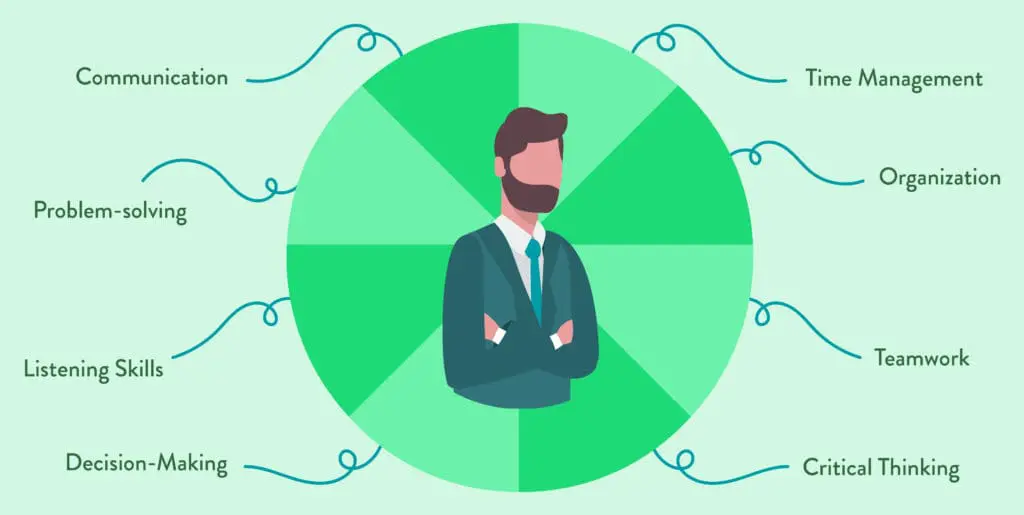
Soft skills employers value include communication, problem-solving, adaptability, critical thinking, collaboration, emotional intelligence, leadership, conflict resolution, and interpersonal skills.
1. Communication
As one of the most sought after soft skills, communication is the ability to clearly exchange information, ideas, expectations, and feedback.
Strong communicators know how to adjust their approach depending on the audience and situation, whether they are explaining a complex idea to a client, writing an email, presenting recommendations, or discussing a challenge with a coworker.
How to demonstrate it: Give an example of a time you successfully communicated complex information, navigated a difficult conversation, or changed your communication style to better reach a particular audience.
2. Problem-solving
Problem-solving is the ability to identify an issue, understand its underlying cause, evaluate possible solutions, and determine an effective path forward.
Strong problem-solvers do more than react to what went wrong. They ask questions, gather relevant information, consider alternatives, and use what they learn to make decisions.
How to demonstrate it: Describe a specific problem you encountered, how you approached it, the solution you chose, and the result.
3. Adaptability
Adaptability is the ability to adjust when circumstances, priorities, technologies, or expectations change.
As AI and other technologies continue to reshape workflows, employees may need to learn new tools, rethink established processes, or take on responsibilities that did not previously exist.
How to demonstrate it: Share an example of a project or situation that changed unexpectedly and explain how you adjusted your approach.
4. Critical thinking
Critical thinking is the ability to evaluate information, question assumptions, identify relevant evidence, and make reasoned judgments.
This skill is particularly useful when employees are working with large amounts of information or AI-generated output that still requires human review and context.
How to demonstrate it: Discuss a time when you challenged an assumption, identified information others had overlooked, or used evidence to make a difficult decision.
5. Collaboration
Collaboration is the ability to work effectively with other people toward a shared goal.
Strong collaborators contribute their own expertise while listening to other perspectives, communicating openly, resolving disagreements, and understanding how their work affects the larger team.
How to demonstrate it: Describe a successful team project and be specific about your individual contribution and how you worked with others to achieve the outcome.
6. Emotional intelligence
Emotional intelligence involves recognizing and managing your own emotions while understanding how your behavior and communication affect other people.
In the workplace, emotional intelligence can help employees receive feedback, manage pressure, navigate difficult conversations, and build productive working relationships.
How to demonstrate it: Provide an example of how you handled constructive criticism, supported a teammate, or remained productive during a challenging situation.
7. Leadership
Leadership is not limited to managing people. Employees at any level can demonstrate leadership by taking ownership, influencing others, making thoughtful decisions, and helping move work forward.
Strong leaders also understand when to listen, delegate, provide direction, or give someone else room to take the lead.
How to demonstrate it: Discuss a situation where you took initiative, helped align a group around a goal, mentored someone, or assumed responsibility for an outcome.

8. Conflict resolution
Disagreements are inevitable when people with different responsibilities, priorities, and perspectives work together.
Conflict resolution involves listening to different viewpoints, identifying the underlying issue, communicating constructively, and finding a productive way forward.
How to demonstrate it: Share an example of a workplace disagreement and focus on how you helped resolve it rather than who was right.
9. Interpersonal skills
Interpersonal skills encompass many of the behaviors that help people build productive professional relationships.
They include listening, empathy, reliability, respect, self-awareness, and the ability to work effectively with different personalities and communication styles.
How to demonstrate it: Use examples that show how you built trust, maintained strong working relationships, or successfully worked with people whose styles differed from your own.
How to demonstrate soft skills on a resume
Rather than simply adding a list of soft skills to your resume, demonstrate them through your experience and accomplishments.
For example, instead of writing: Strong communication skills
provide context: Presented monthly performance recommendations to cross-functional leadership teams, translating technical findings into actionable business priorities.
The second example shows where the skill was used and gives an employer more evidence that the candidate actually possesses it.
Whenever possible, connect soft skills to specific responsibilities, accomplishments, and outcomes.
How to demonstrate soft skills in an interview
Interviews give candidates an opportunity to provide evidence of the soft skills employers are evaluating.
NACE’s Job Outlook 2026 found that employers recommend preparing examples of situations where candidates used their skills to solve problems.
Before an interview, identify several experiences that demonstrate capabilities relevant to the role. These might include:
- resolving an unexpected problem
- adapting to changing priorities
- navigating disagreement within a team
- communicating complicated information
- taking initiative without being asked
- learning a new skill or technology
- receiving and applying constructive feedback
Using a structure such as the STAR method can help organize those examples around the situation, task, action, and result.
How employers can evaluate soft skills when hiring
Hiring managers should define the soft skills that are actually important for the role rather than relying on generic requirements such as “excellent communicator” or “team player.”
Then build those capabilities into the interview process.
Behavioral questions can help candidates provide concrete examples of how they have demonstrated a skill in the past. For example, if adaptability is important, ask:
“Tell me about a time the requirements of a project changed unexpectedly. What did you do?”
If collaboration matters, ask:
“Tell me about a time you had to work with someone whose approach was very different from yours.”
Structured questions also give hiring teams a more consistent basis for evaluating candidates than relying solely on subjective impressions of who appears to have strong “people skills.”
How can you develop better soft skills?
Soft skills can be developed through practice, feedback, education, and experience.
Start by identifying the capabilities most relevant to your current role or career goals. Then look for opportunities to deliberately practice them.
That could mean volunteering to present a project, asking for feedback on your communication style, taking responsibility for a cross-functional initiative, mentoring a colleague, or learning how to navigate conflict more effectively.
Courses and professional development programs can help introduce frameworks and techniques, but applying those skills in real situations is what turns knowledge into capability.

Finding the right combination of technical and soft skills
Strong candidates bring more than a checklist of technical qualifications. They know how to apply their expertise while communicating, adapting, collaborating, and solving problems effectively.
For employers, identifying that combination requires looking beyond credentials to understand how candidates have demonstrated their skills in real situations.
For job seekers, the goal is equally straightforward: don’t just tell employers which soft skills you have. Show them where you’ve used those skills and what happened because of it.
Final thoughts on soft skills in the workplace
At Mondo, we take a different approach to staffing by staying up to date on the latest employment trends. We believe in finding the right person for the job, not just filling it with someone who meets all of the qualifications on paper.
That’s why we focus on finding candidates with the transferable skills necessary to excel in your company culture and thrive in their role — and we can help you do the same.
We have years of experience matching top talent with companies like yours, so don’t hesitate to reach out and let us know what you need. With our help, you can find the perfect candidate with all the soft skills required to be successful in your business.
Mondo Matches Great Talent With Great Companies
With an expansive, connected network of the top IT, Tech, Creative, and Digital Marketing professionals and a proprietary process, Mondo can match you with the hard-to-find, specialized talent you need.
- Contact Mondo today for all your hiring needs
- Download our annual Salary Guide for detailed salary breakdowns for roles & jobs across the technology, creative & digital marketing industries