Fake Job Candidates Are Changing Remote Hiring: What Employers Need to Know
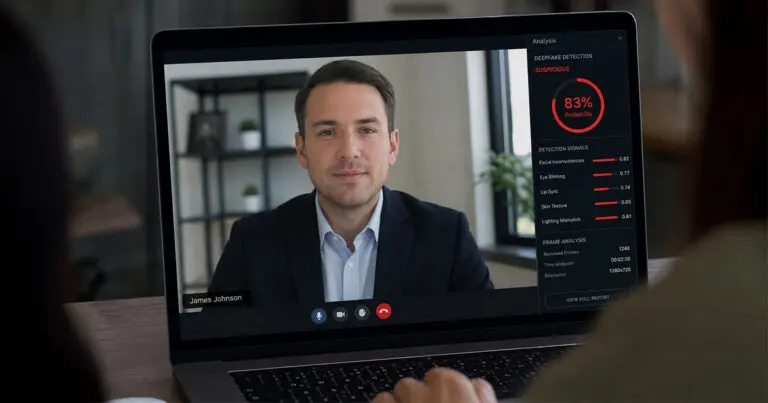
AI tools can help fraudulent job applicants create convincing resumes, identities, photos, and even interview appearances, making candidate verification a new priority in remote hiring.
For employers hiring technology talent, evaluating whether someone has the right skills may no longer be enough. They also need confidence that candidates are who they claim to be.
That doesn’t mean employers should distrust remote candidates. It means hiring processes increasingly need to verify two separate things: candidate quality and candidate authenticity.
What Are Fake Job Candidates?
Fake job candidates are applicants who intentionally misrepresent or fabricate their identity, credentials, location, employment history, skills, or participation in the interview process to obtain employment.
Some use stolen identities. Others create fake resumes, fake profiles, or misleading work histories. More sophisticated fraud can involve proxy interviews, manipulated video, or someone other than the applicant ultimately performing the work.
The risk is already affecting U.S. employers. In 2025, the U.S. Department of Justice announced the sentencing of an Arizona woman who helped North Korean IT workers pose as U.S. workers to secure remote positions at more than 300 U.S. companies. According to the DOJ, the scheme generated more than $17 million in illicit revenue.
How Is AI Making Candidate Fraud More Convincing?
Generative AI can make it easier to create AI-generated resumes, altered photographs, synthetic audio, fake LinkedIn profiles, and other elements of a convincing digital identity.
The FBI warned in 2025 that North Korean IT workers have used artificial intelligence and face-swapping technology during video interviews to conceal their identities. The agency has also documented the use of stolen identities, proxy infrastructure, fake online job accounts, and U.S.-based facilitators.
As deepfake technology, deepfake software, and voice cloning become more accessible, a polished digital presence shouldn’t be treated as proof of identity on its own.
Does Using AI Make Someone a Fake Candidate?
No. Using AI during a job search does not automatically make someone a fake candidate.
A legitimate applicant might use AI tools to research an employer, improve a resume, or practice interview questions. The risk begins when artificial intelligence is used to deliberately misrepresent identity, experience, location, skills, or who is completing the interview or work.
That distinction matters. Employers should focus fraud detection efforts on deception and misrepresentation, not AI use itself.
Why Are Remote Tech Jobs Being Targeted?
Remote technology roles can create additional verification challenges because recruiting, interviewing, onboarding, equipment delivery, and day-to-day work may all happen without an in-person interaction.
That makes remote hiring highly dependent on digital trust. It can also make technology positions particularly consequential targets because employees may receive access to company devices, networks, code, cloud environments, proprietary information, and customer data.
In June 2025, the DOJ announced enforcement actions involving North Korean remote IT worker schemes that had secured employment at more than 100 U.S. companies. According to court documents cited by the DOJ, workers involved in the schemes gained access to sensitive employer information, including export-controlled U.S. military technology.
Why Traditional Hiring Checks May Not Be Enough
Traditional hiring processes often rely on separate trust signals: a resume, LinkedIn profile, background checks, video interviews, employment verification, and identity documents.
Sophisticated fraud can exploit the gaps between them.
For example, fake candidates could combine identity theft with fake profiles, use another person during a virtual interview or proxy interviews, and later rely on remote access tools to allow someone elsewhere to perform the job.
The takeaway isn’t that background checks or video interviews are ineffective. It’s that no single checkpoint should be expected to verify identity, skills, and experience at once.
What Are the Warning Signs of a Fake Job Candidate?
Employers should look for multiple inconsistencies rather than treating any single behavior as proof of fraud.
Potential warning signs include:
- Candidate names, contact information, employment history, education, or LinkedIn profiles that don’t align across sources.
- Resume experience that the candidate struggles to explain when asked detailed follow-up questions.
- Unexplained inconsistencies in appearance, voice, or other details between video interviews.
- Multiple fake job applications that share resume content or contact information.
- Last-minute changes to addresses, payment information, or equipment-delivery locations.
- Unusual requests involving remote access tools during onboarding or employment.
The FBI recommends independently verifying employment and education and cross-referencing candidate photographs and contact information across professional profiles, portfolio sites, and other sources. It also advises employers to watch for unusual remote-access activity.
Applicant Tracking Systems may also help hiring teams identify repeated information across applications, such as contact information or resume content appearing under multiple identities.
These indicators should trigger verification, not assumptions. Technical issues, disabilities, accents, connectivity problems, or different communication styles should never automatically be interpreted as evidence that someone is a deepfake candidate.
How Can Employers Protect Against Fake Job Candidates?
The strongest defense against fake candidates is a hiring process with multiple verification checkpoints rather than reliance on a single interview, background check, or fraud detection tool.
Employers can strengthen remote hiring in five key ways:
- Strengthen identity verification. Establish consistent verification procedures at appropriate stages of interviewing and onboarding rather than relying on subjective recruiter judgment.
- Verify employment and education independently. Confirm credentials through authoritative sources instead of relying exclusively on information supplied by the candidate.
- Validate real-world expertise. Use experience-based follow-up questions, structured technical assessments, or live problem-solving to determine whether candidates can demonstrate the skills they claim.
- Connect recruiting, HR, IT, and security. Establish an escalation process so inconsistencies discovered at different stages can be evaluated together.
- Continue verification through onboarding. Pay attention to equipment delivery, account creation, access requests, location information, and unexpected changes to candidate details after an offer is accepted.
The FBI recommends identity verification during interviewing, onboarding, and throughout remote employment, as well as direct verification of employment and education and monitoring for suspicious remote connections.
The goal isn’t to make remote work harder. It’s to make verification a standard part of a digital hiring process.
What Role Can Staffing Partners Play in Candidate Verification?
Staffing partners can add another layer of candidate vetting before applicants reach an employer’s interview process.
For organizations hiring specialized technology talent, that can include structured recruiter screening, employment-history validation, technical assessments, and processes for identifying inconsistencies across candidate information.
Employers should ask staffing partners how they:
- Verify candidate identity and employment history.
- Assess technical expertise.
- Handle discrepancies discovered during screening.
- Confirm location when it is relevant to a role.
- Maintain consistent vetting standards across remote positions.
These controls shouldn’t necessarily slow hiring down. Building verification into sourcing and screening can help employers maintain speed without adding an entirely new process after candidates have already advanced.
The FBI has specifically advised organizations using contracted IT workers to educate third-party companies about the threat. Its 2025 guidance also recommends verifying that third-party staffing firms use robust hiring practices and routinely audit them.
The Bottom Line: Trust in Remote Hiring Now Requires Verification
AI is changing what employers can safely assume during remote hiring. A polished resume, convincing LinkedIn profile, successful background check, or strong performance in video interviews can provide useful information, but no single signal necessarily establishes both candidate quality and authenticity.
The answer isn’t abandoning remote work or treating legitimate candidates with suspicion. It’s building a hiring process that verifies identity, experience, and skills at multiple points while maintaining a fair candidate experience.
For employers competing for specialized technology and digital talent, stronger identity verification can be part of better hiring—not a barrier to it.
Looking to hire top-tier Tech, Digital Marketing, or Creative Talent? We can help.
Every year, Mondo helps to fill thousands of open positions nationwide.
More Reading…
- Leadership in the Age of AI: Mondo President, Stephanie Wernick Barker Speaks With Entrepreneur News Hour
- Why Candidate Experience Is the Most Underrated Hiring Advantage
- AI Hiring Lawsuits: Risks and How Employers Can Stay Compliant
- How to Innovate in Tech While Navigating a Hiring Freeze
- What Career Building in Your Company Should Look Like—and How to Ask for It
- How To Innovate in Tech When You’re Low on Resources
- AI Is Changing Everything. But the Smartest Leaders? They’re Betting on People.
- Seasonal Hiring Trends 2025: Staffing Solutions Shaping the Workforce
- How to Ask Your Manager For Feedback (and Actually Use It to Grow)
- How to Promote Career Building in Your Company Without a Big Budget
- How to Innovate in Tech Without Burning Out Your Team