How to Spot Fake Jobs and Fake Recruiters Online
Fake jobs and recruiters can be difficult to spot because many scams imitate legitimate hiring practices. The safest approach is to verify the recruiter, company, and job independently before sharing sensitive information, sending money, or accepting an offer.
The Federal Trade Commission reported that losses tied to job scams and fake employment agencies grew from $90 million in 2020 to $501 million in 2024.
How Can You Tell if a Recruiter Is Legitimate?
Before responding to an opportunity, verify who is contacting you. Don’t rely solely on the information or links the recruiter provides.
1. Check the Recruiter’s Professional History
Look at the recruiter’s LinkedIn profile and employment history. A legitimate recruiter should generally have a credible professional footprint, connections to the organization they represent, and activity consistent with their role.
2. Verify the Recruiter’s Email Address
Check whether the email domain matches the company or staffing firm the recruiter claims to represent. Free email accounts or domains that are slightly different from the company’s real domain deserve additional scrutiny.
3. Confirm the Recruiter Independently
Visit the company’s official website yourself. If you’re unsure whether someone actually represents the organization, contact the company through independently verified contact information.
LinkedIn recommends reviewing a recruiter’s work history, connections to the company’s page, available verification signals, and whether communications come from the company’s domain.
How Do You Verify That a Job Posting Is Real?
A job appearing on a recognizable platform doesn’t automatically make it legitimate. Scammers can impersonate real employers and reproduce convincing job descriptions.
1. Find the Job on the Company’s Careers Page
Go directly to the employer’s official website rather than following a link from the recruiter. Search the careers section for the position and compare the title, location, responsibilities, and other details.
2. Check for Inconsistencies
Compare the recruiter’s information with what you find independently. Differences in company names, domains, job descriptions, salaries, locations, or contact details can signal that more verification is needed.
3. Contact the Employer if You’re Unsure
If you can’t confirm the opportunity, contact the company using a phone number, website, or email address you found independently. The FTC specifically recommends independently contacting an employer when you cannot verify that an opportunity is legitimate. (Federal Trade Commission)
What Are the Biggest Red Flags of a Fake Job?
One unusual detail doesn’t necessarily mean you’re dealing with a scam. Multiple warning signs should prompt you to stop and investigate.
The Offer Seems Too Easy
Be cautious when you’re offered a job with little or no meaningful interview process, especially when the compensation seems unusually attractive for the experience or responsibilities required.
You’re Pressured to Act Immediately
Scammers may create urgency around interviews, paperwork, offers, or onboarding. A legitimate hiring process should give you a reasonable opportunity to review information and ask questions.
You’re Asked for Sensitive Information Too Early
Be wary of early requests for Social Security numbers, banking information, copies of identification, or other sensitive personal information before you’ve verified the employer and reached a legitimate stage of the hiring process.
You’re Asked to Pay for Something
Requests to purchase equipment, training, certifications, or software should receive additional scrutiny. Be especially cautious if you’re sent a check, told to deposit it, and then instructed to purchase equipment or return some of the money.
The FTC warns that legitimate employers won’t charge candidates to get a job or send them checks and then ask them to send some of the money elsewhere.
Should You Trust an Unexpected Recruiting Text?
An unexpected recruiting message isn’t automatically fraudulent, but it should be treated as a lead to investigate rather than proof that a real opportunity exists.
Be Cautious With Vague Job Details
Messages promising flexible remote work, attractive compensation, or easy work without clearly explaining the employer and position deserve additional scrutiny.
Don’t Assume a Company Name Makes It Legitimate
Scammers can impersonate recognizable companies and recruiting firms. Verify the opportunity through the company’s official website before continuing the conversation or providing information.
Watch Where the Conversation Goes Next
Be cautious if you’re quickly pushed toward WhatsApp, Telegram, cryptocurrency, financial transactions, or vague online “tasks.”
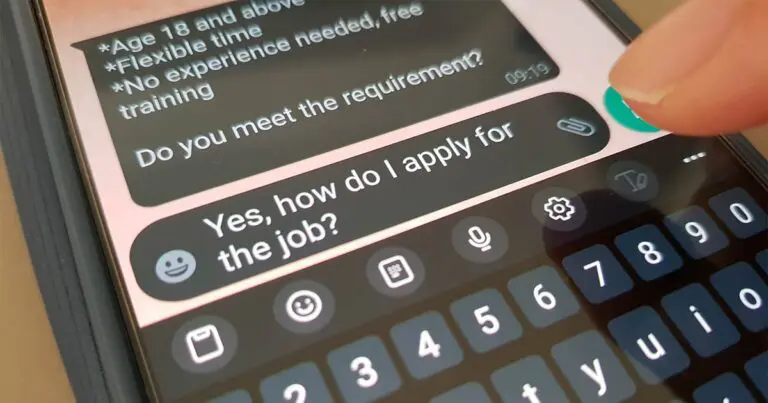
In April 2026, the FTC warned about fake recruiters impersonating legitimate companies through unsolicited texts, including messages advertising vaguely described remote positions.
What Should You Check Before Accepting an Online Job Offer?
Before accepting, run one final verification check. The goal is to make sure the recruiter, job, employer, and hiring process all connect.
Verify the Recruiter
Confirm that the person contacting you has a credible connection to the employer or staffing firm they claim to represent.
Verify the Job
Look for the position through the employer’s official careers site or confirm it directly with the organization.
Verify the Hiring Process
Ask yourself whether you’ve gone through a reasonable professional interview and evaluation process. An offer that arrives before anyone has meaningfully assessed your experience should raise questions.
Protect Your Money and Personal Information
Don’t send money, cryptocurrency, gift cards, or banking information simply because someone says it’s required for employment.
What’s the Best Rule for Spotting Job Scams?
Verify outside the recruiting conversation.
Don’t verify a company by clicking the recruiter’s link, calling the recruiter’s number, or relying exclusively on documents they sent you. Find the company’s official website and contact information independently and confirm the opportunity yourself.
A polished profile, recognizable logo, convincing job description, or professional-looking offer letter isn’t proof that a job is real.
Research the recruiter. Confirm the job. Protect your information. And never pay someone for the opportunity to work.
Looking to hire top-tier Tech, Digital Marketing, or Creative Talent? We can help.
Every year, Mondo helps to fill thousands of open positions nationwide.
More Reading…
- What Does the Meta Settlement Require for Teen and Child Safety on Facebook and Instagram?
- Why Is Diversity in Leadership Important? Top Benefits & Strategies
- How to Break Down Silos and Improve Cross-Functional Collaboration
- Leadership in the Age of AI: Mondo President, Stephanie Wernick Barker Speaks With Entrepreneur News Hour
- Why Candidate Experience Is the Most Underrated Hiring Advantage
- AI Hiring Lawsuits: Risks and How Employers Can Stay Compliant
- How to Innovate in Tech While Navigating a Hiring Freeze
- What Career Building in Your Company Should Look Like—and How to Ask for It
- How To Innovate in Tech When You’re Low on Resources
- AI Is Changing Everything. But the Smartest Leaders? They’re Betting on People.
- Seasonal Hiring Trends 2025: Staffing Solutions Shaping the Workforce
- How to Ask Your Manager For Feedback (and Actually Use It to Grow)