What Is an Autonomous Enterprise? How AI Agents Are Changing Business Operations
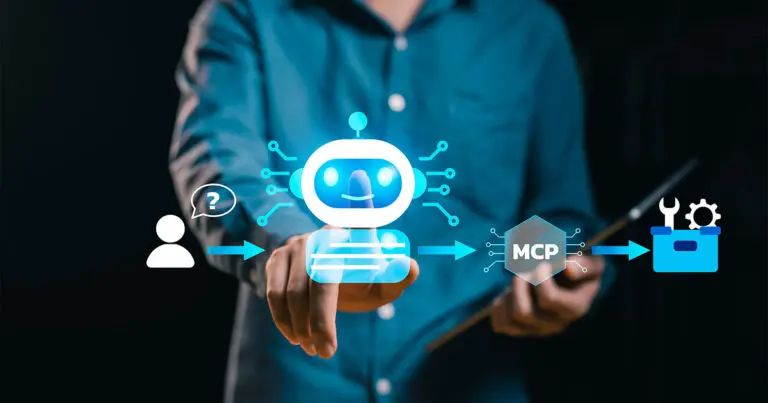
An autonomous enterprise is a business that uses AI agents, intelligent automation, and connected systems to execute workflows and make certain operational decisions with limited human intervention.
Unlike traditional AI tools that assist employees with individual tasks, autonomous enterprise AI can coordinate activities across departments, applications, and business processes.
This shift creates opportunities for greater operational efficiency, responsiveness, and scalability. However, building an autonomous enterprise requires more than deploying AI technology. Organizations also need to establish the infrastructure, governance frameworks, and technical expertise needed to support increasingly independent systems.
What Is an Autonomous Enterprise?
An autonomous enterprise is an organization that uses artificial intelligence to manage and execute business workflows with varying degrees of independence. By combining agentic AI, enterprise automation, and integrated data systems, businesses can enable technology to coordinate tasks, respond to changing conditions, and complete defined objectives without requiring human direction at every step.
Rather than eliminating human involvement, this approach changes how people and technology share operational responsibilities.
How Does an Autonomous Enterprise Work?
An autonomous enterprise connects AI agents to business applications, enterprise data, and automation technologies through APIs and orchestration platforms.
These connections allow agents to access information, select appropriate actions, and execute multistep workflows within established permissions.
For example, when a customer changes an order, an AI agent could verify inventory, update the delivery schedule, modify the order in the system of record, and notify the customer.
Instead of requiring employees to coordinate each step manually, connected systems can move the process forward while escalating exceptions that require human approval.
Microsoft’s enterprise multi-agent workflow architecture guidance describes how specialized AI agents can collaborate through an orchestration layer to execute organizational tasks, providing a technical foundation for this type of coordinated automation.
Autonomous Enterprise vs. Traditional Automation
Traditional enterprise automation follows predefined rules and sequences. Autonomous AI systems introduce greater flexibility by interpreting objectives and selecting actions based on available information.
| Traditional automation | Autonomous enterprise AI |
|---|---|
| Follows fixed rules and workflows | Can adapt actions within defined objectives |
| Requires explicit instructions for defined scenarios | Can evaluate context and select approved actions |
| Often relies on manual exception handling | Can identify, resolve, or escalate exceptions |
| Executes predefined tasks and workflows | Can coordinate workflows across connected systems |
| Performs predetermined processes | Supports goal-oriented operations within defined constraints |
Autonomous enterprises build on existing automation technologies rather than replacing them entirely.
Agentic AI is the technology that enables AI systems to pursue goals and take actions with limited human direction. An autonomous enterprise is the broader operating model that applies those capabilities across connected business systems, workflows, and organizational processes.
In other words, agentic AI helps power the autonomous enterprise, but the two terms are not interchangeable.
What Are Examples of Autonomous Enterprise Operations?
Autonomous enterprise technology can support operations across IT, customer service, finance, and supply chains. Its practical value comes from connecting activities that would otherwise require coordination between multiple systems, teams, or manual processes.
IT Operations and Cybersecurity
AI agents can monitor infrastructure, identify unusual activity, and initiate approved responses to technical issues.
For example, an autonomous security solution could identify suspicious activity associated with online attacks and initiate predefined protective measures. Depending on an organization’s security policies, AI agents could also coordinate with an existing security service to investigate threats or escalate incidents requiring human intervention.
Customer Service and Support
Autonomous AI agents can coordinate customer requests across CRM platforms, billing applications, and support systems.
By accessing authorized customer data, these systems could resolve routine inquiries, update account information, and initiate follow-up actions, creating opportunities for a more consistent customer experience.
Finance and Supply Chain Operations
In finance, autonomous agents can support transaction reconciliation, identify discrepancies, and coordinate approval workflows.
Within Supply Chain Management, AI agents can monitor inventory, evaluate fulfillment constraints, and coordinate updates across procurement and logistics systems.
These examples illustrate potential applications rather than suggesting that every organization has already implemented fully autonomous operations.
What Are the Benefits and Challenges of an Autonomous Enterprise?
An autonomous enterprise can improve how organizations coordinate work, respond to operational changes, and manage complex processes. However, realizing these benefits depends on reliable infrastructure, appropriate oversight, and clear accountability.
Potential Benefits of Autonomous Operations
By connecting AI agents across business systems, organizations can reduce manual coordination and improve the flow of information between departments.
Potential benefits include:
- Greater operational efficiency: Automating routine handoffs and repetitive tasks can help reduce delays in business workflows.
- Improved responsiveness: AI agents can monitor conditions and initiate approved actions when operational needs change.
- Better workflow coordination: Connected systems can support cross-departmental processes without requiring employees to transfer information manually.
- More scalable operations: Intelligent automation can help businesses manage additional processes while allowing employees to focus on complex decisions and exceptions.
The value of an autonomous operating model should ultimately be measured by successful business outcomes, not simply the number of tasks automated.
Key Challenges of Enterprise Autonomy
Greater autonomy also introduces technical and organizational risks.
Legacy systems, inconsistent data, and disconnected applications can limit an AI agent’s ability to execute tasks accurately. A reliable data foundation helps ensure agents can access current, consistent information across enterprise systems.
When customer data, inventory records, or financial information differ between applications, autonomous workflows risk producing incorrect actions or decisions.
Cybersecurity is another important consideration. Agents with access to multiple applications can create security exposure if their permissions are not properly controlled.
AI governance must also address how decisions are made, monitored, and reviewed.
The National Institute of Standards and Technology (NIST) AI Risk Management Framework identifies four core risk management functions: govern, map, measure, and manage. It emphasizes ongoing oversight, documented responsibilities, and risk management throughout the AI lifecycle.
For enterprises, the challenge is balancing autonomy with accountability. Human oversight remains essential when AI-driven actions involve sensitive information, financial commitments, or decisions with significant business consequences.
What Technology and Skills Are Needed for an Autonomous Enterprise?
Building an autonomous enterprise requires more than selecting an AI platform. Organizations need connected technology infrastructure, reliable data, and professionals capable of designing, securing, and maintaining autonomous systems.
The Technology Infrastructure Behind Autonomous AI
Autonomous AI depends on systems that can securely exchange information and execute actions across business applications.
A strong technical foundation typically includes integrated enterprise platforms, accessible data, API connectivity, workflow orchestration, and monitoring tools.
Organizations must also establish permissions that determine which systems agents can access, what actions they can perform, and when human authorization is required.
Microsoft’s agentic behavior engineering guidance emphasizes system-enforced controls, reliable information sources, testing, and production monitoring when designing agentic workloads. These practices help organizations manage the additional complexity of autonomous execution.
The Specialized Talent Behind Autonomous Operations
Implementing autonomous enterprise technology requires expertise across several technical disciplines:
- AI and machine learning engineering: Designing, evaluating, and optimizing autonomous agents.
- Cloud architecture and systems integration: Connecting AI capabilities with existing enterprise infrastructure.
- Cybersecurity and AI governance: Managing access controls, security risks, and compliance requirements.
- Automation engineering: Building and maintaining coordinated workflows across business applications.
Technical expertise must also be paired with an understanding of business processes. AI engineers may design the systems, but operational leaders must help define successful outcomes, decision boundaries, and escalation requirements.
For organizations without all these capabilities internally, specialized technology staffing can provide access to expertise needed for implementation, integration, and ongoing optimization.
How Can Businesses Prepare for the Autonomous Enterprise?
Preparing for an autonomous enterprise starts with identifying where AI-driven operations can deliver meaningful business value. Rather than pursuing full autonomy immediately, organizations should evaluate their existing systems, operational priorities, and technical readiness.
Five steps can help establish a practical foundation:
- Identify suitable business workflows. Prioritize repetitive, measurable processes with clear objectives and manageable risks. Look for opportunities where autonomous coordination could reduce manual handoffs.
- Evaluate technology readiness. Assess data quality, enterprise integrations, security controls, and existing automation capabilities. Identify infrastructure limitations before expanding agent access.
- Assess workforce capabilities. Determine whether internal teams have the AI engineering, cybersecurity, cloud, and integration expertise needed to support autonomous operations.
- Start with controlled pilots. Introduce agents in limited environments, establish approval requirements, and evaluate performance before granting broader operational authority.
- Measure business outcomes. Track successful task completion, accuracy, exception rates, human intervention, and operating costs to determine whether autonomous workflows create measurable value.
The autonomous enterprise represents a shift in how businesses organize and execute work. However, realizing its potential requires more than advanced AI technology. Organizations also need secure infrastructure, clear governance, and specialized expertise to integrate and manage autonomous systems.
As businesses evaluate their readiness for AI-driven operations, Mondo helps connect organizations with specialized technology talent across AI engineering, cloud infrastructure, cybersecurity, and enterprise systems.
Looking to hire top-tier Tech, Digital Marketing, or Creative Talent? We can help.
Every year, Mondo helps to fill thousands of open positions nationwide.
More articles about top industry salaries and trends:
- What to Do After Being Laid Off or Fired: 8 Essential Steps
- What Is an Autonomous Enterprise? How AI Agents Are Changing Business Operations
- Adapting to Rapid Technological Change in the Workplace
- What Is Predictive AI? How It Works, Uses, and Limitations
- 10 Tech Integration Jobs in Demand for 2027: What Hiring Data Reveals
- Business Analyst Jobs in 2027: Driving AI and Digital Transformation
- 2026 SIA Global Power 150 List Honors Mondo President Stephanie Wernick Barker
- What Are Smart Contracts? Business Uses, Benefits, and Risks
- Top In-Demand Digital Transformation Roles for 2027