AI Infrastructure Jobs: Who Will Build, Power, Cool, and Maintain the AI Economy?
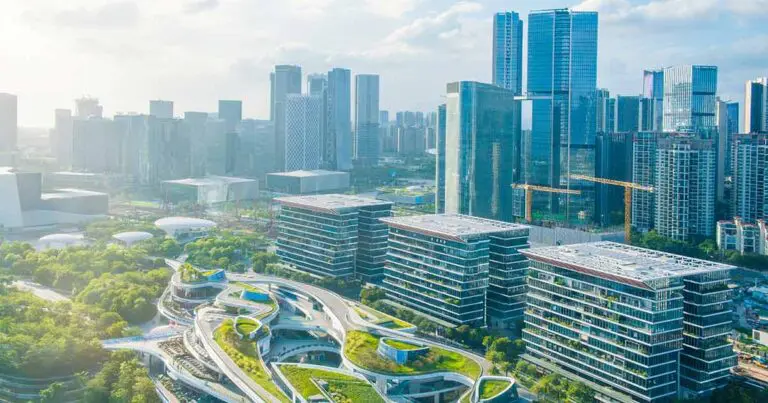
The AI economy is not limited to software companies or machine learning engineers. Its physical expansion depends on data centers, semiconductor capacity, electricity, cooling, network infrastructure, construction, and maintenance, making AI infrastructure an important source of workforce opportunity across technical and skilled-trades occupations.
The scale of that physical requirement is becoming clearer. Lawrence Berkeley National Laboratory estimated that data centers consumed about 4.4% of total U.S. electricity in 2023. Its June 2026 update estimates that data centers could account for 11.8% by 2030 in its reference case, with scenarios ranging from 9.5% to 15.3%.
Organizations looking at AI primarily through a technology-talent lens may therefore be overlooking a much broader workforce story.
Why Is AI Infrastructure Becoming a Major U.S. Growth Market?
AI workloads require more than models and software. They depend on physical facilities capable of providing enormous amounts of compute, electricity, cooling, connectivity, and redundancy. At the software layer, organizations also need training infrastructure capable of coordinating distributed compute, managing GPU utilization, supporting container orchestration, and using infrastructure as code to make complex environments repeatable and scalable.
The chain extends well beyond the traditional technology sector:
AI adoption → computing demand → data centers → power + cooling + networking → construction + equipment + maintenance → workforce requirements
This is what makes AI infrastructure particularly significant from a workforce perspective. A technology investment at one end of the chain can translate into requirements for engineers, electricians, technicians, construction professionals, facility specialists, manufacturing workers, and other skilled roles throughout the infrastructure ecosystem.
The U.S. Department of Energy identifies data-center expansion and AI applications, alongside domestic manufacturing growth and electrification, as major drivers of rising U.S. electricity demand. (U.S. Department of Energy, 2025.)
That connection changes the workforce conversation. The people enabling the AI economy will include machine learning engineers and applied ML teams, but they will also include the people responsible for the physical systems underneath cloud computing and AI workloads.
What Industries Are Growing Around AI Data Centers?
Data centers are better understood as ecosystems than as individual buildings. Each facility sits at the intersection of construction, electrical infrastructure, cooling, telecommunications, advanced hardware, facility management, and software infrastructure.
That creates workforce requirements at multiple points in the value chain.
Data Center Construction
Before a data center can process a single AI workload, it has to be built. That means site development, concrete and structural work, mechanical systems, electrical installation, equipment integration, testing, and commissioning.
The workforce supporting these projects can include electricians, construction managers, project managers, engineers, equipment operators, HVAC specialists, technicians, and commissioning professionals. Because data centers integrate so many specialized systems, employers may also need people who understand how those systems interact rather than only their individual components.
For staffing and workforce leaders, this is an important distinction: AI infrastructure jobs do not begin when a data center goes online. Workforce requirements emerge during planning and construction and continue throughout the facility’s operating life.
Electrical Infrastructure and Power Equipment
Compute requires electricity, making access to reliable power one of the fundamental requirements of AI infrastructure.
That connects data-center development to substations, transformers, switchgear, transmission and distribution infrastructure, backup generation, energy storage, and sophisticated power-management systems. DOE notes that large-scale electricity demand from data centers and other large customers is placing significant new requirements on the U.S. electric grid. (U.S. Department of Energy.)
The workforce implications extend to electrical engineers, electricians, utility technicians, field-service technicians, controls specialists, power-system engineers, and workers who manufacture and maintain electrical equipment.
Some of the most important AI infrastructure jobs, in other words, may never involve writing an AI model. They will involve getting reliable power to the machines running it.
Data Center Cooling
Powering high-performance computing equipment is only part of the challenge. The heat it generates also has to be managed.
That makes thermal management a critical part of AI infrastructure. Depending on the facility and hardware configuration, the cooling ecosystem can include traditional HVAC systems as well as chillers, pumps, heat exchangers, controls, and liquid-cooling technologies.
The workforce behind these systems can include HVAC technicians, mechanical engineers, controls technicians, facility engineers, plumbers and pipefitters, and maintenance technicians.
As computing configurations evolve, employers may increasingly value workers who can operate at the intersection of mechanical, electrical, controls, and facility management disciplines. The opportunity is therefore not confined to a single cooling technology; it lies in the broader requirement to manage increasingly complex physical computing environments.
Fiber and Network Infrastructure
Compute capacity has limited value if information cannot move quickly and reliably between systems, facilities, and users. Network infrastructure is therefore another foundational layer of the AI economy.
That includes fiber, networking hardware, installation, testing, monitoring, maintenance, and the systems connecting servers within facilities and data centers to the wider network.
Fiber technicians, network engineers, installers, field-service workers, and network operations specialists all contribute to this layer. On the software side, an AI Infrastructure Engineer or AI Infrastructure Specialist may work with networking, container orchestration, cloud computing, distributed compute, and infrastructure as code to ensure computing resources can be deployed and managed efficiently.
This illustrates how the physical and digital sides of AI infrastructure increasingly overlap. A fiber connection, GPU cluster, orchestration platform, and machine learning workload may belong to different technical disciplines, but they ultimately depend on one another.
Backup Power and Resilience
Data centers are designed around reliability. Interruptions can affect critical workloads and services, which means facilities need systems capable of maintaining operations when normal power or equipment is disrupted.
That creates an ecosystem around generators, uninterruptible power supplies (UPS), batteries, controls, energy storage, and other resilience technologies.
The associated workforce can include generator technicians, electrical technicians, controls specialists, battery and storage technicians, field-service engineers, and facility operations professionals.
These jobs also illustrate why hardware operations and facility management deserve more attention in the AI workforce conversation. Once computing capacity is installed, organizations need people who can keep it functioning around the clock.
Semiconductors and Advanced Computing Hardware
AI infrastructure begins upstream from the data center. GPUs, memory, processors, networking components, and other advanced hardware all depend on a complex semiconductor manufacturing ecosystem.
That brings semiconductor fabrication, advanced packaging, manufacturing equipment, materials, testing, and maintenance into the AI infrastructure workforce picture.
The U.S. Department of Commerce reported in January 2025 that planned U.S. electronics manufacturing investments had reached nearly $450 billion amid the expansion of domestic semiconductor production. (U.S. Department of Commerce, 2025.)
Building that manufacturing capacity requires semiconductor technicians, process engineers, equipment technicians, manufacturing engineers, maintenance specialists, quality professionals, and skilled production workers.
The connection matters because the AI infrastructure workforce does not stop at the data-center door. It stretches upstream into the factories and supply chains producing the hardware that makes large-scale computing possible.
Which AI Infrastructure Jobs Could Become Hardest to Fill?
The challenge may be less about finding “AI talent” and more about securing specialized workers across several infrastructure disciplines at once.
Specialized Roles Are Hard to Substitute
AI infrastructure requires electricians, HVAC and cooling specialists, controls technicians, commissioning experts, semiconductor technicians, network specialists, and critical-facility operators. Employers also need AI infrastructure engineers skilled in distributed compute, GPU utilization, and cloud computing.
Many of these roles combine specialized knowledge with hands-on experience, making them difficult to fill with adjacent talent alone.
Other Industries Need the Same Skills
Utilities, advanced manufacturing, construction, and semiconductor facilities compete for many of the same workers.
The Bureau of Labor Statistics projects employment of HVAC mechanics and installers to grow 10.9% and industrial machinery mechanics 17.8% from 2024 to 2034. While not specific to data centers, these projections show that AI infrastructure employers are recruiting from labor pools needed across the economy. (U.S. Bureau of Labor Statistics, 2026.)
Workforce Planning Has to Start Earlier
Employers cannot assume specialized workers will be available when a project reaches the hiring stage. Identifying critical roles, transferable skills, and local talent pools earlier can reduce that risk.
The key question is not just how many workers will we need? It is which skills will we need, when—and who else will be competing for them?
Why Could Skilled Trades Become a Bottleneck for AI Expansion?
There is a paradox at the center of AI development: some of the most important jobs supporting one of the world’s most advanced digital technologies are intensely physical.
A machine learning model may exist in software, but the infrastructure running it does not. Servers have to be manufactured and installed. Facilities have to be constructed. Electrical systems have to be wired. Cooling equipment has to be maintained. Fiber has to be connected. Backup systems have to be tested.
That means skilled-trades workforce availability can become a strategic infrastructure consideration rather than simply an HR issue.
It also broadens the definition of an AI job.
Machine learning engineers and applied ML professionals remain important to developing and deploying AI systems. But the wider workforce includes electricians, HVAC technicians, network specialists, maintenance professionals, semiconductor technicians, facility operators, and construction workers who make large-scale computing possible.
The AI workforce, therefore, is broader than the people developing AI. It includes the people who build, power, cool, connect, operate, and maintain the infrastructure behind it.
Where Are the Most Interesting Niches Within the AI Infrastructure Market?
Some of the most interesting workforce opportunities sit one layer below the headline category of “data centers.” These niches solve specific problems created by large-scale computing and can require highly specialized combinations of technical and operational expertise.
| Infrastructure niche | What it supports | Workforce implications |
|---|---|---|
| Liquid cooling | Thermal management for high-density computing | Mechanical, HVAC, plumbing and controls professionals |
| Transformers and switchgear | Power delivery and distribution | Electrical, manufacturing and field-service talent |
| Fiber infrastructure | High-speed data connectivity | Fiber technicians, installers and network engineers |
| Backup power | Facility resilience and uptime | Generator, battery, controls and electrical technicians |
| Data-center construction | New computing capacity | Skilled trades, engineers and project managers |
| Semiconductor equipment | Production of advanced computing hardware | Equipment technicians, engineers and maintenance specialists |
| Commissioning | Testing and facility readiness | Electrical and mechanical commissioning specialists |
| Facility maintenance | Continuous data-center operations | Critical-facility and maintenance technicians |
| Training infrastructure | Large-scale machine learning workloads | AI infrastructure engineers, distributed-systems and platform specialists |
| Hardware operations | Deployment and performance of computing equipment | Hardware, systems and operations technicians |
These niches also demonstrate how blurred the boundaries can become. An organization building embedded infrastructure for an AI product may need software engineers working close to hardware, while a hyperscale facility may need physical infrastructure specialists supporting the same underlying computing ecosystem.
The result is not one AI labor market. It is a network of interconnected talent markets.
What Should Employers Do Differently as AI Infrastructure Expands?
AI infrastructure employers should plan workforce needs across the project lifecycle instead of hiring reactively as each need emerges.
Plan Talent Needs Earlier
Construction, commissioning, operations, and maintenance require different skills at different stages. Mapping those needs before projects ramp up gives employers more time to build pipelines for specialized roles.
Location matters, too. Data centers are tied to physical sites, making local labor availability, training pipelines, and competition from nearby employers part of the workforce equation.
Look Beyond Direct Data Center Experience
Many AI infrastructure skills already exist in adjacent industries. Electricians from utilities, controls technicians from advanced manufacturing, and maintenance specialists from other critical facilities may have highly transferable experience.
For employers, focusing on skills rather than industry background can expand the available talent pool.
Match the Workforce Model to the Work
Construction, installation, commissioning, and ongoing operations do not necessarily require the same staffing approach. Employers may need a mix of contractors, contingent professionals, project teams, and permanent employees as infrastructure moves from construction to operation.
For staffing firms, this creates an opportunity well beyond machine learning recruitment. Industrial, engineering, skilled trades, manufacturing, construction, and technical talent are all part of the AI infrastructure workforce.
The Next Phase of AI Growth Will Be Built in the Physical World
AI may be powered by software, but scaling it is a physical challenge. Data centers need chips, power, cooling, connectivity, and resilient infrastructure, and people to build, operate, and maintain every layer.
That makes the AI workforce much broader than machine learning engineers. Electricians, HVAC technicians, network specialists, semiconductor workers, commissioning professionals, and critical-facility teams are all part of the infrastructure that makes AI possible.
For workforce leaders, the takeaway is clear: AI infrastructure is as much a skilled-workforce challenge as a technology challenge.
Looking to hire top-tier Tech, Digital Marketing, or Creative Talent? We can help.
Every year, Mondo helps to fill thousands of open positions nationwide.
More articles about hiring and industry trends…
- The Top Fastest Growing Industries Moving Into 2027
- How to Answer “Why Did You Choose This Career?” in an Interview
- Are You Working In the Business or On the Business?
- Change Management for Digital Transformation: 7 Strategies for Successful Adoption
- Meta’s Landmark Social Media Settlement Raises the Stakes for Tech Governance
- How to Spot Fake Jobs and Fake Recruiters Online
- What Does the Meta Settlement Require for Teen and Child Safety on Facebook and Instagram?
- Why Is Diversity in Leadership Important? Top Benefits & Strategies
- How to Break Down Silos and Improve Cross-Functional Collaboration
- Leadership in the Age of AI: Mondo President, Stephanie Wernick Barker Speaks With Entrepreneur News Hour
- Why Candidate Experience Is the Most Underrated Hiring Advantage
- AI Hiring Lawsuits: Risks and How Employers Can Stay Compliant