10 Trustworthy AI Thought Leaders Worth Following in 2026

The most credible AI thought leaders today are not necessarily the loudest.
The experts worth following combine deep technical expertise, real-world implementation experience, and a balanced perspective on how artificial intelligence should support human work rather than replace it entirely.
As organizations continue scaling generative AI and experimenting with AI transformation programs, trustworthy voices grounded in responsible implementation and measurable business outcomes are becoming increasingly valuable.
This list prioritizes AI experts with proven AI research credentials, meaningful industry contributions, practical business insight, and measured communication around trustworthy AI adoption.
What Makes an AI Thought Leader Trustworthy?
The most trusted and respected AI experts typically combine deep experience in machine learning, neural networks, computer vision, reinforcement learning, or production systems with a practical understanding of how AI functions inside real organizations, rather than social media popularity.
Trustworthy AI leaders also tend to avoid simplistic narratives around automation. Rather than framing artificial intelligence as something that will immediately replace entire workforces, they focus on responsible adoption, enterprise-grade deployments, workforce adaptation, and operational realities.
Another important distinction is consistency. Credible AI thought leaders educate audiences over time instead of relying on fear-based predictions or hype cycles driven by groundbreaking advances that may not yet translate into scalable business value.
For organizations navigating AI ecosystems, customer service automation, data mining initiatives, or scaling agentic AI capabilities, balanced expertise is increasingly important.
Top 10 Trustworthy AI Thought Leaders to Follow
- Andrew Ng for a Trusted Voice in AI
- Fei-Fei Li for Human-Centered AI
- Demis Hassabis for AI in Science
- Ethan Mollick for Business Leaders
- Cassie Kozyrkov for Enterprise AI Decision Making
- Yoshua Bengio for Responsible AI Research
- Melanie Mitchell for Perspective on AI Development
- Rana el Kaliouby for Human-Aware AI
- Jeremy Howard for Democratizing AI Education
- Allie K. Miller for Practical AI Adoption
1. Andrew Ng for a Trusted Voice in AI
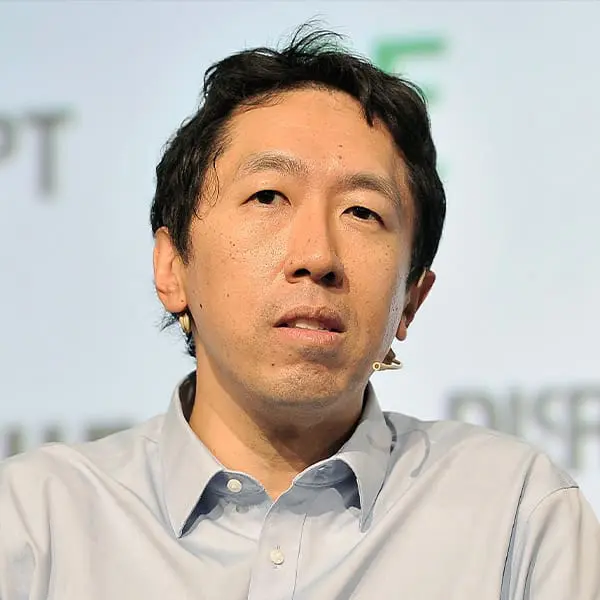
Andrew Ng remains one of the most respected voices in artificial intelligence because of his focus on practical implementation and AI education. As the founder of DeepLearning.AI, co-founder of Coursera, and former Chief Scientist at Baidu, Ng has consistently emphasized making machine learning and deep learning more accessible to organizations and professionals.
His perspective stands out because he approaches AI transformation programs through the lens of human augmentation rather than replacement. Instead of promoting narratives centered around breaking things and starting over, Ng focuses on helping businesses modernize core systems responsibly while improving workforce capability.
Business leaders also trust Ng because he bridges advanced AI research with operational execution. His work frequently explores enterprise-grade deployments, production systems, and practical pathways for scaling generative AI within real organizational environments.
2. Fei-Fei Li for Human-Centered AI

Fei-Fei Li is widely recognized for helping shape modern computer vision while advocating for a more human-centered approach to AI development. Her contributions to ImageNet accelerated progress in convolutional neural networks and deep learning, helping establish many of the foundations behind today’s AI systems.
At the same time, Li has consistently argued that artificial intelligence should remain connected to human outcomes, particularly in healthcare, education, and society. As co-director of Stanford’s Human-Centered AI Institute, she frequently discusses ethical AI development, AI policy, and responsible innovation.
Her balanced communication style has made her one of the most trusted AI thought leaders for organizations seeking practical innovation without losing sight of human impact.
3. Demis Hassabis for AI in Science

Demis Hassabis approaches artificial intelligence primarily as a scientific and research-driven discipline. As CEO of Google DeepMind, Hassabis has overseen major advances in reinforcement learning, neural networks, and scientific AI applications including AlphaFold.
Unlike many AI commentators focused heavily on workforce disruption narratives, Hassabis often frames AI as a tool for accelerating scientific discovery and solving complex global problems. His work highlights how AI research can support healthcare, biology, and advanced scientific modeling rather than simply automating repetitive work.
This long-term perspective has helped position him as a balanced authority within the broader AI ecosystem.
4. Ethan Mollick for Business Leaders
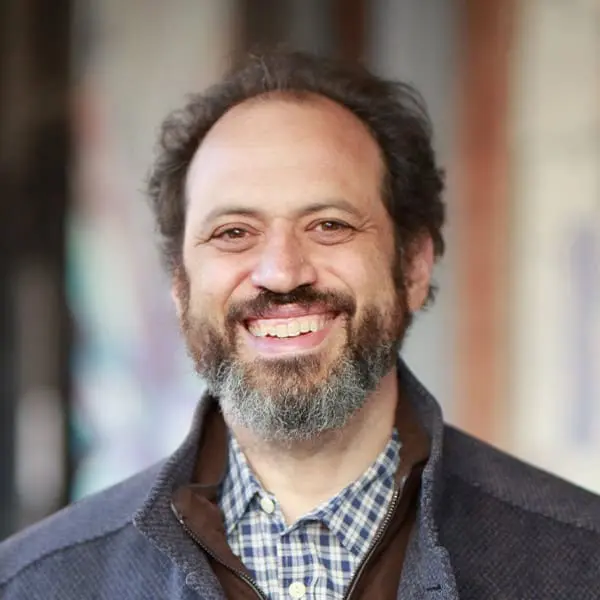
Ethan Mollick has become one of the most practical and trusted voices helping organizations understand generative AI in the workplace. His work focuses heavily on how professionals, educators, and businesses are adapting to AI tools in real operational environments.
Mollick frequently explores:
- AI productivity
- AI in the workplace
- organizational adaptation
- and practical AI workflows
Rather than making sweeping claims about artificial intelligence replacing human workers entirely, he emphasizes experimentation, collaboration, and workforce adaptation. His insights are particularly valuable for organizations evaluating customer service automation, knowledge work transformation, and scaling generative AI responsibly.
This practical orientation has made him especially influential among executives and business leaders navigating AI transformation programs.
5. Cassie Kozyrkov for Enterprise AI Decision Making

Cassie Kozyrkov is known for helping organizations make more thoughtful and disciplined AI decisions. Formerly Google’s Chief Decision Scientist, she has become a respected authority on decision intelligence, enterprise AI strategy, and practical implementation.
Kozyrkov frequently encourages organizations to separate useful AI applications from hype-driven narratives. Her work focuses on:
- critical thinking
- responsible implementation
- operational clarity
- and measurable business outcomes
That perspective is increasingly valuable as organizations evaluate enterprise-grade deployments and attempt to integrate AI into production systems without disrupting existing workflows unnecessarily.
Her emphasis on trustworthy AI and evidence-based decision-making makes her one of the more grounded voices in the AI industry.
6. Yoshua Bengio for Responsible AI Research

Yoshua Bengio is considered one of the foundational figures behind modern deep learning and neural networks. His contributions to machine learning research have significantly influenced the development of contemporary artificial intelligence systems.
Beyond his technical work, Yoshua Bengio has become an important advocate for responsible AI governance and long-term oversight. He frequently discusses the importance of balancing groundbreaking advances with safeguards that protect society and preserve human agency.
Unlike more sensational AI personalities, Bengio approaches these conversations through rigorous AI research rather than speculation. His work around trustworthy AI, AI policy, and long-term safety continues to influence both academic institutions and enterprise AI ecosystems.
7. Melanie Mitchell for Perspective on AI Development

Melanie Mitchell has become one of the most respected voices pushing for realism and nuance in conversations about artificial intelligence. Her work explores both the capabilities and limitations of machine learning systems, particularly around reasoning, adaptability, and context.
Mitchell frequently challenges exaggerated assumptions surrounding artificial general intelligence while acknowledging the very real progress being made in AI research. She often emphasizes that human intelligence remains difficult to replicate because of its flexibility, contextual understanding, and ability to adapt beyond conventional measures used in many AI benchmarks.
Her perspective is especially valuable for organizations evaluating scaling agentic AI systems or enterprise-grade deployments because she encourages leaders to focus on practical business outcomes instead of hype-driven expectations.
8. Rana el Kaliouby for Human-Aware AI

Rana el Kaliouby is recognized for her work in emotional AI, affective computing, and human-machine interaction. Her research focuses on helping AI systems better understand human behavior, communication, and emotion.
Rather than emphasizing automation alone, el Kaliouby explores how artificial intelligence can improve customer service, healthcare, communication, and user experience through more empathetic interaction models.
She also brings an important diversity perspective to AI leadership, advocating for more inclusive AI ecosystems and responsible development practices. Her work reinforces the idea that trustworthy AI should enhance human interaction rather than remove human connection from digital experiences.
9. Jeremy Howard for Democratizing AI Education

Jeremy Howard has played a major role in making advanced AI education more accessible through fast.ai and open learning initiatives. His work focuses heavily on helping professionals and non-traditional learners develop practical machine learning skills without requiring elite academic backgrounds.
Howard’s educational philosophy emphasizes experimentation, accessibility, and applied problem-solving. He frequently explores practical implementations of deep learning, neural networks, and production systems while encouraging broader participation in AI development.
His influence has helped democratize AI education at a time when organizations increasingly need workforce readiness and scalable AI literacy initiatives.
10. Allie K. Miller for Practical AI Adoption

Allie K. Miller is known for helping organizations translate AI innovation into practical business execution. Her work centers on enterprise AI strategy, executive education, and workforce readiness as companies continue adopting generative AI technologies.
Miller frequently discusses:
- operational AI implementation
- enterprise adoption strategies
- scaling generative AI
- and organizational change management
Unlike commentators focused primarily on disruption narratives, she emphasizes sustainable integration within existing business operations and core systems. Her practical communication style makes her especially valuable for leaders navigating AI transformation programs in real-world environments.
Common Traits Shared by the Most Credible AI Thought Leaders
Evidence-Based Communication
The most trustworthy AI experts rely on measurable outcomes, research, and operational experience rather than sensational predictions.
Their perspectives are typically grounded in AI research, production systems, and enterprise implementation realities.
Long-Term Expertise
Many of the most credible AI thought leaders have spent decades contributing to machine learning, neural networks, computer vision, reinforcement learning, or data mining research.
Their credibility comes from sustained contribution rather than temporary popularity.
Human-Centered Thinking
Balanced AI leaders consistently emphasize that artificial intelligence should support human capability rather than eliminate human value entirely.
This human-centered perspective is becoming increasingly important as organizations scale generative AI initiatives.
Focus on Augmentation Over Replacement
The experts on this list generally frame AI as a collaborative tool that improves productivity, decision-making, and operational efficiency.
They avoid simplistic narratives suggesting that AI will fully replace human expertise across every industry.
Operational Understanding of AI Adoption
Trustworthy AI leaders understand the complexity involved in enterprise-grade deployments, scaling agentic AI systems, integrating AI into production systems, and modernizing AI ecosystems without destabilizing existing workflows.
How to Evaluate AI Experts Before Following Their Advice
As artificial intelligence adoption accelerates, professionals should become more selective about which voices they trust. Popularity alone is not a reliable indicator of expertise.
Organizations should prioritize experts with:
- direct implementation experience
- measurable business credibility
- educational consistency
- and evidence-based communication
It is also important to separate research-driven insight from marketing narratives. Experts who rely heavily on extreme predictions or fear-based messaging often provide less practical guidance than those focused on operational realities and responsible implementation.
The most valuable AI thought leaders help organizations understand both the opportunities and limitations of modern AI systems while encouraging thoughtful experimentation and long-term workforce adaptation.
Top 10 Thought Leaders in AI/ML to Follow
As artificial intelligence becomes more deeply integrated into business operations, customer service, AI ecosystems, and enterprise-grade deployments, trustworthy AI leadership will only become more important.
Organizations need credible experts who can explain both the promise and limitations of machine learning, deep learning, and generative AI without relying on sensationalism.
The AI thought leaders on this list stand out because they combine technical expertise with balanced perspectives on workforce transformation, responsible implementation, and long-term business value.
As companies continue scaling generative AI and exploring new AI transformation programs, measured guidance grounded in real-world experience will become increasingly essential.
Looking to hire top-tier Tech, Digital Marketing, or Creative Talent? We can help.
Every year, Mondo helps to fill thousands of open positions nationwide.
More Reading…
- What Is the “Player-Coach” Management Model & Why Is It Growing in Popularity?
- Automation Efficiency vs. Workforce Sustainability: The Next Talent Crisis
- Coinbase Layoffs Signal a Bigger Shift: The Rise of AI Organizational Structure
- Top 12 Job Search Tips For New Graduates in 2026
- Job Hugging Is Reshaping Workforce Mobility: Here’s What Leaders Need to Know
- Top 5 Data-Backed Reasons Candidates Drop Out of Hiring Processes
- Why 25% of the Unemployed Can’t Find Jobs Even in a Growing Labor Market
- What Happens When Financial Risk Data Becomes Less Reliable?
- Adobe Semrush Acquisition: What It Signals About AI-Driven Brand Visibility
- How AI Performance Marketing Is Reshaping Talent Strategy in 2026
- Handmade Designs: The New Trust Signal in the Age of AI
- How Elite Product Teams Are Built: 15 Hiring Strategies That Actually Work